

The Connection Between Wisdom Tooth Extractions and Breast Cancer
Most people don’t think twice about wisdom tooth extractions. You go in, the teeth come out, you eat soft food for a few days, and life moves on. With more than 10 million extractions performed every year in the United States, it can feel almost routine.
But here’s what we’ve come to understand after years of practicing biological dentistry: the extraction itself is only half the story. How the site heals — and whether it truly heals — matters just as much as the procedure.
At Blodgett Dental Care, we’ve seen firsthand what can happen when extraction sites don’t heal the way they should. And for some patients, those unresolved areas in the jawbone aren’t just a dental issue. They may be quietly affecting the whole body.
Why the Healing Phase Deserves More Attention
When a wisdom tooth is removed, the jawbone is temporarily exposed. A healthy site will form a stable blood clot and gradually rebuild into strong bone and gum tissue. It’s a remarkable process when it goes well.
When it doesn’t go well, something different happens. Instead of clean regeneration, the area can become a place where bacteria, inflammatory byproducts, foreign debris, and damaged tissue remain trapped — sometimes deep in the bone, sometimes for years.
The jawbones are particularly vulnerable to this because, unlike bones elsewhere in the body, they’re directly exposed to the oral environment every time a tooth is removed. They depend on a clean surgical site and a stable clot to heal properly. When those conditions aren’t met, chronic irritation can quietly take hold.
The tricky part? Many people have no idea.
Hidden Problems, Silent Symptoms
One of the most challenging aspects of poorly healed extraction sites is that they often don’t announce themselves with sharp, obvious pain. A patient can feel relatively fine on the surface while unhealthy tissue continues to harbor microbes and inflammatory material deep in the bone.
Over time, the body may be working constantly — at a low level — to manage that burden. The immune system doesn’t get a day off. The lymphatic system keeps trying to drain what it can. This persistent, quiet stress is something we take seriously in biological dentistry, because oral sources of chronic inflammation don’t always stay local.
A Patient Story We Can’t Stop Thinking About
A recent case from our practice illustrates exactly why this matters.
We treated a 30-year-old woman navigating bilateral breast cancer. When she was in her late teens, she had her wisdom teeth removed — and the healing was rough. Painful, prolonged, difficult. But eventually the gums closed, life continued, and she moved on like most people do.
What she didn’t know was that her extraction sites had never fully healed in a healthy, biologically sound way.
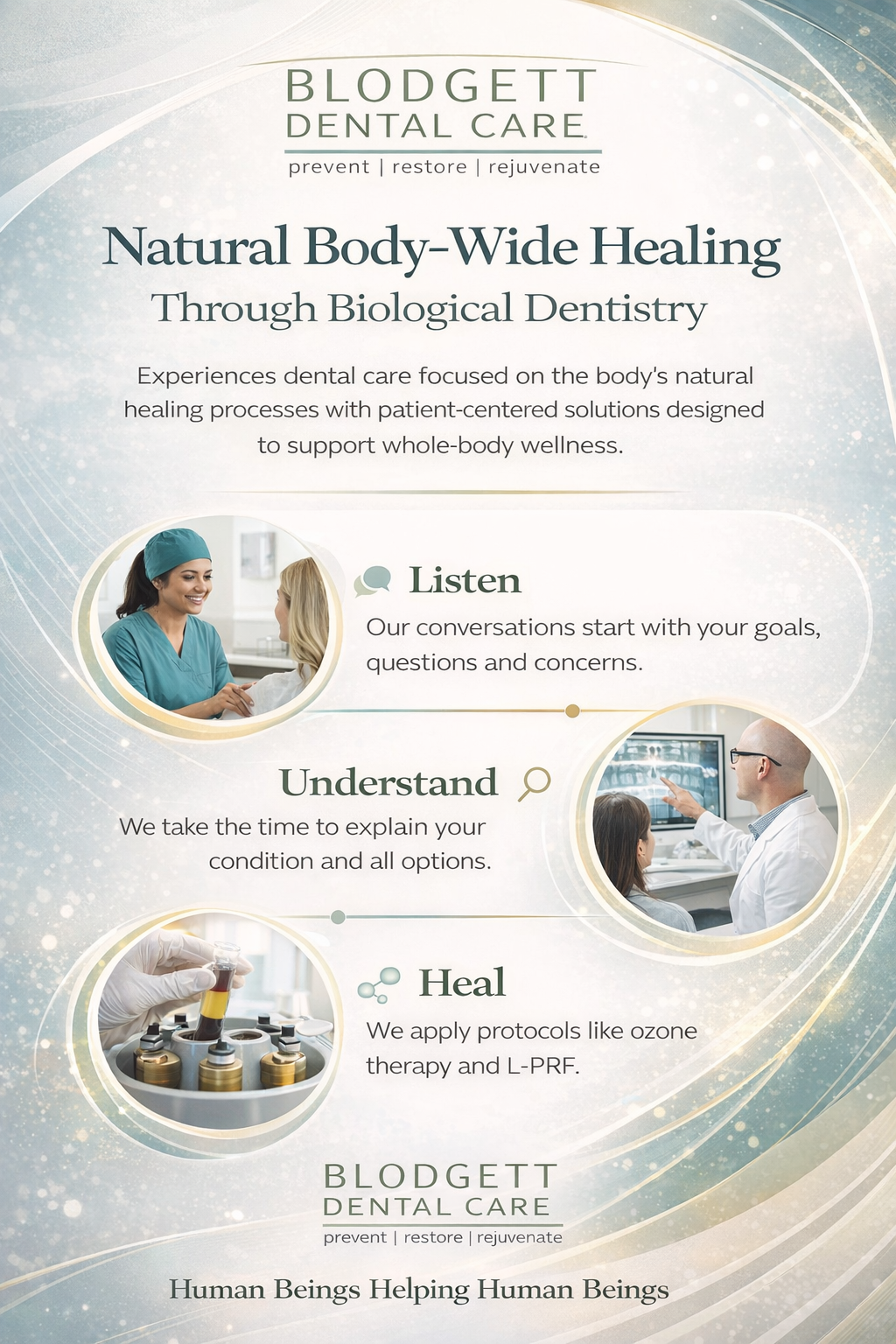
When we evaluated her jaw, we found black, waxy masses embedded in the areas where her wisdom teeth had been removed. These materials had been trapped in her jawbone for over a decade. During treatment, we resected the unhealthy tissue, thoroughly cleaned the surrounding bone, applied ozone therapy to support a cleaner environment, and grafted the site using L-PRF — a healing concentrate made from her own blood and growth factors.
We’re not suggesting that her improperly healed wisdom teeth caused her cancer. Medicine isn’t that simple, and we’d never make that claim. But we do believe that unresolved areas of chronic inflammation and microbial burden in the jaw shouldn’t be ignored — especially when someone is already navigating a serious systemic illness.
What Bones Should and Shouldn’t Contain
Healthy bone should not be chronically harboring microbes, toxic debris, or foreign material. When something like that remains in the jawbone — sealed away from view, causing no obvious daily pain — the body may be silently working overtime to manage it.
The oral cavity is highly vascular. It’s intimately connected to the lymphatic and immune systems. Inflammation in the mouth doesn’t exist in a vacuum. Biological dentistry asks a question that traditional approaches sometimes skip over: did the bone actually heal, or did it just close?
Closing and healing are not the same thing.
How We Approach Wisdom Tooth Extractions Differently
If you’re planning to have your wisdom teeth removed, the protocol used during and after surgery makes a meaningful difference. Here’s what a more biologically supportive approach looks like at our practice.
Ozone Therapy
Ozone is used to help cleanse the extraction site, reduce microbial burden, and support a healthier environment for healing. It’s one of the ways we work to set the stage for proper recovery from the very beginning.
L-PRF (Leukocyte-Platelet Rich Fibrin)
L-PRF is created from your own blood — a small sample drawn the day of your procedure and processed to concentrate healing cells and growth factors. When placed into the extraction socket, it supports clot stability, tissue regeneration, and natural healing. Because it comes entirely from your own body, it’s as biocompatible as it gets.
Thorough Surgical Preparation
One of the most critical steps in any extraction is making sure the site is properly cleaned before it’s closed. Leaving behind unhealthy tissue, debris, or contamination increases the chance of long-term complications. Our team takes great care to create the cleanest possible environment for recovery.
Related Pages for Biological Dentistry, Cavitations, and Whole-Body Healing
These are five of the strongest internal pages to support this article and move readers deeper into cavitation treatment, ozone therapy, biological dental care, chronic infection, and the healing protocols behind Blodgett Dental Care’s approach.
Cavitation Treatment
The most direct service-page link for readers who want to understand treatment options for unhealthy extraction sites, jawbone cavitations, and long-term healing after wisdom tooth removal.
Explore cavitation treatmentJawbone Cavitations
A powerful educational page that reinforces the core topic of hidden jawbone issues, poor healing after extractions, and why these areas deserve deeper evaluation.
Learn about jawbone cavitationsOzone Therapy
An ideal supporting page for readers interested in how ozone is used to help cleanse surgical sites and support a healthier biological healing environment.
See how ozone therapy worksChronic Infection
This connection page strengthens the oral-systemic health message by showing how lingering infection may affect more than just the mouth.
Read about chronic infectionBiological Dental Care
A strong trust-building link that helps readers understand the philosophy behind your care model and why biological healing matters in extraction and surgical dentistry.
Discover biological dental careSigns a Previous Extraction May Not Have Healed Properly
Not every poorly healed site causes obvious symptoms — but some patients do notice things that, in retrospect, were signals worth paying attention to.
Lingering Jaw Discomfort
A site that didn’t heal fully may remain sensitive or subtly uncomfortable over time, even years after the extraction.
Unexplained Pressure or Inflammation
Some patients describe a sense of fullness, tenderness, or low-grade irritation in the area that never quite resolved.
A History of Difficult Healing
Severe dry socket, repeated infections, or unusually prolonged recovery after wisdom tooth removal can be a clue that the area deserves a closer look.
Ongoing Health Challenges With No Clear Source
For some patients, a biological dental evaluation becomes one piece of a larger puzzle when they’re trying to identify hidden inflammatory burdens in the body.
Wisdom Tooth Removal Deserves to Be Taken Seriously
Wisdom tooth extractions are surgical events. They affect bone, gum tissue, circulation, the immune system, and the body’s healing capacity. When they’re handled carefully and supported properly, the body can recover beautifully. When healing is incomplete, the consequences can linger far longer than anyone anticipated.
We believe patients deserve to know this — and to have options.
Biological Dental Care in Portland
Whether you’re planning a wisdom tooth extraction and want to approach it with more biological intention, or you’ve been wondering whether an old extraction site may never have healed properly, we’re here to help.
We take a whole-body, biologically informed approach to oral health. We explain your options clearly. And we let you decide what path makes sense for your life and your health goals.
At Blodgett Dental Care, we believe your oral health should align with your values, your goals, and your overall wellness — human beings helping human beings.
If you desire an approach to oral health where all treatment options are presented and you get to choose based on your priorities, we would love to serve you.
Email us at info@bdcpdx.com to reserve your New Patient Experience, or visit our website to learn more about our Dental Tourism solutions.
Call Blodgett Dental Care at (971) 385-5747 to schedule your next appointment.
Ready to Take the Next Step?
Connect with Blodgett Dental Care to schedule your visit or ask questions about your treatment options.
Frequently Asked Questions About Wisdom Tooth Extractions, Cavitations, and Biological Healing
These answers are written to help patients better understand wisdom tooth removal, poor healing after extractions, hidden jawbone infections, and the biological dentistry approach to treatment. At Blodgett Dental Care, we focus on clear education, patient-centered care, and whole-body considerations so you can make informed decisions about your health.
What is the connection between wisdom tooth extraction and long-term health?
Wisdom tooth removal is often routine, but the healing phase matters. If an extraction site does not heal well, unhealthy tissue, trapped debris, or microbes may remain in the jawbone. In biological dentistry, these areas are taken seriously because chronic inflammation in the mouth may place ongoing stress on the immune system and may affect whole-body wellness.
Can a wisdom tooth extraction site become infected years later?
Yes, a poorly healed extraction site can remain unhealthy for years without obvious symptoms. Some patients develop hidden jawbone issues sometimes referred to as cavitations, where damaged bone, trapped materials, or microbial burden remain in the area long after the tooth was removed. This is one reason persistent, unexplained symptoms deserve a deeper evaluation.
What is a dental cavitation after wisdom tooth removal?
A dental cavitation is an area of unhealthy or poorly healed jawbone, often found in places where teeth were previously removed. In many biological dental practices, this term is used to describe chronic defects in healing that may involve inflammation, poor blood flow, or lingering infection in the bone. Wisdom tooth sites are one of the most common areas evaluated for this concern.
How do I know if my wisdom tooth extraction site did not heal properly?
Some people notice jaw tenderness, recurring discomfort, pressure, unusual sensations, or a history of difficult healing after surgery. Others have no obvious local symptoms at all. At Blodgett Dental Care, we look at the full history, symptoms, imaging, and clinical findings when evaluating whether a prior extraction site may need attention.
Can oral infection affect the rest of the body?
The mouth is not separate from the rest of the body. Chronic oral infections and unresolved inflammation may contribute to a larger whole-body burden because the immune, lymphatic, and circulatory systems are all connected. Biological dentistry focuses on identifying and reducing those burdens while supporting healing in a thoughtful, conservative, and patient-specific way.
What is biological dentistry for wisdom tooth extractions?
Biological dentistry looks beyond simply removing the tooth. The focus is on how the extraction site is cleaned, how the bone is supported, how healing is protected, and how the procedure may affect the patient’s overall health. This approach often includes protocols designed to reduce microbial burden, protect surrounding tissues, and encourage healthier regeneration of bone and gums.
Why is ozone used after tooth extraction?
Ozone is used by many biological dentists to help cleanse the extraction site and support a healthier healing environment. It is often part of a protocol intended to reduce unwanted microbial contamination in the surgical area. Patients researching ozone therapy after wisdom tooth removal are usually looking for ways to support cleaner, more biologically favorable healing.
What is L-PRF and why is it used in extraction sockets?
L-PRF stands for leukocyte-platelet rich fibrin. It is made from the patient’s own blood and contains concentrated healing cells and growth factors. When placed into an extraction socket, L-PRF may help support clot stability, tissue repair, and bone healing. Because it comes from your own body, it is a biocompatible option used to encourage a more natural healing process.
Should all wisdom teeth be removed?
Not always. The decision depends on factors such as tooth position, symptoms, infection risk, bone support, bite function, and the patient’s overall goals. Some wisdom teeth may need removal, while others may not. A high-quality evaluation should include a discussion of risks, benefits, timing, healing support, and whether a biological surgical protocol is appropriate for the case.
Where can I find biological wisdom tooth extraction and cavitation treatment in Portland?
Patients searching for biological dentistry in Portland, cavitation treatment, or wisdom tooth extraction healing support often want a practice that considers both oral health and whole-body health. Blodgett Dental Care in Portland provides a patient-centered approach that emphasizes education, advanced protocols, and treatment options aligned with your values and goals.
Helpful Links
-
Systemic inflammation after extraction
Peer-reviewed study on impacted third molars and inflammatory markers.
-
PRF and post-extraction healing
2025 meta-analysis on platelet-rich fibrin and healing outcomes.
-
Oral inflammation and whole-body health
Landmark review on periodontal disease and systemic conditions.
Blodgett Dental Care Human Beings Helping Human Beings
Care rooted in listening, compassion, and whole-body wellness.
Call Blodgett Dental Care at (503) 713-6980 to schedule your next appointment!
Contact Us Online
Read Also

Ceramic Veneers: The Psychology and Whole-Health Benefits of a Beautiful Smile
Table of Contents Toggle Smile Spotlight | Blodgett Dental Care What Are Ceramic Veneers? Why People Choose Veneers Oral Health Meets Whole-Body Wellness Are Veneers Right…

Oral Infection and Breast Cancer: Why Oral Health Matters More Than You Think
Table of Contents Toggle Toxic Tuesday | Blodgett Dental Care How Oral Infection Can Affect Breast Health A Biological Dentistry Perspective Prevention Starts With Oral…